
Picture this. You have been sitting at your desk all day. Your neck feels stiff, your legs feel heavy, and your mind will not stop racing. Now picture flipping your whole body upside down for just one minute. That small shift is exactly what the shoulder stand offers.
The shoulder stand, called Sarvangasana in Sanskrit, is one of the most respected poses in the entire yoga tradition. Ancient yoga texts often place it right after the sun salutation in importance. The name itself is a clue to why. “Sarva” means all, and “anga” means limb or body part. So Sarvangasana literally means the pose for all parts of the body. Few postures try to do so much at once.
In this blog, we will walk through what the shoulder stand actually is, the anatomy behind it, preparatory poses, how to practice it safely with correct alignment, beginner-friendly variations, who should be careful with it, its benefits both evidence-based and traditional common mistakes, the best time to practice, how it compares to plow pose, its interesting connection with Panchatatva, the five elements that ancient Indian philosophy believes make up everything in nature, and answers to the most common questions people ask about this pose.
What Exactly Is a Shoulder Stand?
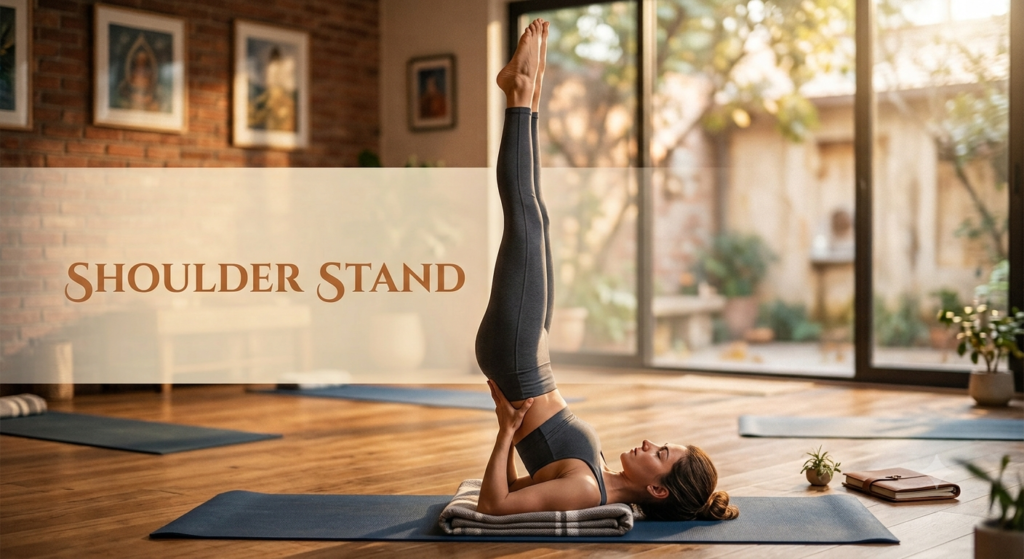
A shoulder stand is an inverted pose. Your body rests upside down, balanced on your shoulders and upper arms, while your legs point straight toward the ceiling. Your hands support your lower back, and your elbows stay planted firmly on the mat, shoulder-width apart.
It is called a shoulder stand because your body weight should rest on your shoulders and upper arms, not your neck. This one detail is the difference between a safe, beneficial pose and one that can strain your cervical spine. We will come back to this point because it matters more than almost anything else in this pose.
Sarvangasana belongs to a family of yoga postures known as inversions, which also includes the headstand and the plow pose. What makes the shoulder stand special is that it is generally considered gentler on the neck than a headstand, while still offering many of the same benefits of turning the body upside down.
The Anatomy Behind the Pose
Understanding what happens inside your body during a shoulder stand helps you appreciate why yogis valued it so highly.
When you invert your body, gravity temporarily changes direction relative to your bloodstream. Raising your legs above your heart may assist venous return, meaning blood from your legs and lower body can travel back to the heart with less effort. Your brain, however, regulates its own blood supply through a process called cerebral autoregulation, so it isn’t accurate to say an inversion simply floods it with more blood. What changes more noticeably is reduced blood pooling in the legs and a shift in blood distribution toward the upper body.
Your chin also rests close to your chest in this pose, in what yoga teachers call a chin lock or jalandhara bandha. In traditional yoga, this gentle compression near the throat is believed to stimulate the thyroid and parathyroid glands, which sit in that region and play a role in regulating metabolism and calcium balance. It’s worth noting upfront that strong scientific evidence for this specific effect is limited, even though the idea has been taught for centuries. At the same time, holding the pose activates your shoulders, upper back, triceps, and deep core muscles, since they are responsible for keeping your body stable and aligned.
Preparatory Poses to Practice First
Jumping straight into a full shoulder stand without preparation is one of the biggest reasons beginners struggle with it. These poses help open the shoulders, neck, and hamstrings, and are worth practicing in the weeks before you attempt a full hold:
- Bridge pose (Setu Bandhasana): Opens the chest and strengthens the lower back and legs.
- Cat-Cow stretch: Warms up the spine and improves overall spinal mobility.
- Plow pose (Halasana): Often practiced right alongside or just before shoulder stand, since it uses a similar shape and builds hamstring flexibility.
- Legs-up-the-wall pose (Viparita Karani): A gentle, low-risk inversion that lets you feel the benefits of an inverted position without any weight on your neck or shoulders.
- Shoulder openers, such as gentle wall stretches or arm-behind-back stretches: Improve the shoulder mobility needed to support your body weight comfortably.
Spending even five minutes on these poses before attempting shoulder stand can make the full pose feel noticeably more stable.
Step-by-Step: How to Practice Shoulder Stand Safely
Warm up your neck, shoulders, and spine with some gentle stretches before you begin. Cold muscles and an unprepared neck are the most common reasons people get hurt in this pose.
- Lie flat on your back on a folded blanket or thick mat, with your shoulders on the blanket and your head on the floor, not on the blanket. This slight height reduces pressure on your neck.
- Keep your arms flat beside your body, palms facing down.
- Engage your core and slowly lift your legs up and over, letting your hips come off the floor.
- Bend your elbows and place your palms on your lower back for support, fingers pointing upward toward your spine.
- Slowly straighten your legs so your body forms as straight a vertical line as possible, from shoulders to toes.
- Keep your elbows close together, no wider than shoulder-width, and press them firmly into the mat.
- Relax your face and throat. Breathe slowly through your nose.
- Hold for 15 to 30 seconds when you are new to the pose. With regular practice over weeks, you can build up toward one to three minutes.
- To exit, bend your knees toward your forehead, place your palms flat on the floor, and slowly roll your spine down one vertebra at a time. Rest on your back for at least a minute afterward.
Always follow the shoulder stand with a gentle backbend, such as the fish pose, to release any compression built up in the neck and chest.
Beginner-Friendly Variations and Modifications
You don’t need to attempt the full pose on day one. These variations make the shoulder stand more accessible while you build strength and confidence:
- Half shoulder stand: Instead of lifting all the way up, support your hips with your hands and keep your legs at a 45-degree angle rather than fully vertical. This reduces the demand on your balance and core.
- Against a wall: Lie with your hips close to a wall and walk your feet up the wall as you lift into the pose. The wall offers extra support and confidence for first-timers.
- With a chair: Some practitioners use a sturdy chair to rest their legs on while supporting the lower back, which is a gentler entry point taught in many restorative yoga classes.
- Using extra blankets: Stacking a folded blanket under your shoulders (not your head) raises your shoulders slightly higher than your head, which reduces strain on the neck significantly. This is one of the most recommended modifications, especially for beginners or anyone with a longer neck.
- Shorter holds: There is nothing wrong with holding the pose for just 10 to 15 seconds at first. Consistency over time matters far more than duration on any single day.
As your comfort grows, you can slowly progress toward the full expression of the pose without the props.
Who Should Be Cautious or Avoid This Pose
Yoga should support your health, not challenge it recklessly. You should avoid or modify the shoulder stand if you have any of the following:
- Neck injuries, cervical spondylosis, or a herniated disc
- High blood pressure that is not well controlled
- Glaucoma or retinal problems
- Some traditional yoga schools recommend avoiding shoulder stand during menstruation, while many modern teachers suggest practicing according to personal comfort and medical advice
- If you are pregnant, avoid shoulder stand unless your healthcare provider and an experienced prenatal yoga instructor advise that it is appropriate for you
- A recent stroke, heart condition, or history of blood clots
If any of this applies to you, speak with a doctor and a qualified, experienced yoga teacher before attempting this pose. There is no shame in skipping an inversion. There are dozens of other postures that offer wonderful benefits without the risk.
The Benefits of Shoulder Stand: What’s Backed and What’s Traditional
1. Believed to Support the Thyroid Region
In traditional yoga, the gentle chin lock created in shoulder stand known as jalandhara bandha is believed to support the thyroid region. However, scientific evidence confirming a direct effect on thyroid function is limited, so it’s best understood as a traditional belief rather than a proven medical outcome.
2. May Assist Venous Return
Raising your legs above your heart may help blood return from the legs to the heart and temporarily reduce blood pooling in the lower body. This is different from claiming more blood reaches the brain the brain manages its own supply regardless of body position. Still, many people describe feeling less heaviness in their legs and more alertness after practicing it, especially after long hours of standing or sitting.
3. Calms the Nervous System
Inversions are widely associated with a calming effect on the body’s stress response. Slowing your breath while your body is upside down encourages the parasympathetic nervous system, the part responsible for rest and relaxation, to take over from the fight-or-flight response.
4. Builds Strength in the Shoulders, Arms, and Core
Balancing your entire body weight on your shoulders and upper arms is real strength work. Regular practice tones the shoulders, upper back, triceps, and deep abdominal muscles that keep your spine stable.
5. May Support Digestion as Part of a Regular Practice
Some practitioners find that shoulder stand supports healthy digestion when it’s part of a consistent yoga routine, possibly through gentle pressure on the abdominal region and reduced stress overall. Research on this specific pose’s effect on digestion is limited, though yoga in general has been linked to improved digestive comfort.
6. May Support Mental Clarity and Focus
Many people report feeling more focused and mentally refreshed after practicing shoulder stand, possibly due to the calming effect on the nervous system, slower breathing, and improved body awareness rather than any direct increase in “brain blood flow.”
7. A Popular Belief About Skin Appearance
Some people feel their skin looks more refreshed after practicing inversions like the shoulder stand, possibly due to a temporary shift in circulation toward the face. This is a widely repeated idea in yoga circles, though scientific evidence supporting it is limited.
Shoulder Stand and Panchatatva: An Ancient Connection
According to traditional Indian philosophy, everything in the universe, including the human body, is made up of five elements known as Panchatatva: Earth (Prithvi), Water (Jal), Fire (Agni), Air (Vayu), and Space (Akash). Yoga was designed, in part, to bring these five elements into balance within us. According to traditional yogic philosophy, shoulder stand is believed to help balance all five elements within the body this is a matter of philosophy and tradition, not scientific claim.
The shoulder stand is often described, within this traditional framework, as a pose believed to touch all five elements at once:
- Earth (Prithvi): Your shoulders and elbows press down firmly into the mat, grounding your body and reflecting the earth element’s quality of stability.
- Water (Jal): The improved circulation and fluid movement through the body echoes the water element, which governs flow, flexibility, and internal cleansing.
- Fire (Agni): By stimulating the thyroid gland, the pose is linked to the fire element, which represents metabolism, digestion, and inner energy.
- Air (Vayu): Slow, controlled breathing during the pose activates the air element, associated with the nervous system and mental steadiness.
- Space (Akash): As the mind settles and awareness expands during the hold, practitioners connect with the space element, representing openness, silence, and inner peace.
This is why many traditional teachers describe Sarvangasana as more than a physical stretch. It is seen as a way of harmonizing the five elements of Panchatatva that ancient yogis believed governed both body and mind.
Common Mistakes That Reduce the Benefits
- Letting weight rest on the neck instead of the shoulders and upper arms
- Swinging the legs up too fast, which can strain the lower back
- Turning the head side to side while in the pose, which risks neck injury
- Holding the breath instead of breathing steadily
- Skipping the warm-up and counter pose afterward
- Practicing on a hard, unpadded surface, which increases pressure on the neck
Fixing even one or two of these habits can make the pose noticeably safer and more comfortable.
Building a Simple Weekly Practice
If you are new to the shoulder stand, consistency matters more than duration. Try practicing it three to four times a week, always after a short warm-up, and always followed by the fish pose or a gentle backbend. As your strength, balance, and neck flexibility improve over several weeks, you can gradually increase your hold time.
Track how you feel, not just how long you hold the pose. A well-aligned, comfortable thirty-second shoulder stand offers far more value than a shaky two-minute one done with poor form.
Best Time to Practice Shoulder Stand
Most yoga teachers recommend practicing inversions like the shoulder stand in the morning, on an empty stomach, when the body feels fresh and the mind is calm. If mornings don’t work for your schedule, practicing in the evening is fine too, as long as you wait at least two to three hours after a meal and avoid practicing right before bed, since inversions can be energizing for some people.
Shoulder Stand vs Plow Pose: What’s the Difference?
Shoulder stand (Sarvangasana) and plow pose (Halasana) are often practiced together and share a similar starting position, which sometimes causes confusion between the two.
- In shoulder stand, your legs point straight up toward the ceiling, and your hands support your lower back.
- In plow pose, your legs continue moving further overhead until your toes touch or reach toward the floor behind your head, and your arms typically rest flat on the mat.
Plow pose stretches the spine and hamstrings more deeply, while shoulder stand focuses more on balance and the chin lock near the throat. Many practitioners move from shoulder stand into plow pose, and then back, as part of a single flowing sequence.
Is shoulder stand safe for beginners?
Yes, as long as it’s approached gradually. Using props like a folded blanket, a wall, or a half-shoulder-stand variation makes it far more approachable for beginners than jumping straight into the full pose.
How long should I hold a shoulder stand?
Start with 10 to 30 seconds and build up gradually over several weeks. There’s no need to rush toward longer holds; consistent, comfortable practice matters more than duration.
Can I do shoulder stand every day?
Many practitioners do practice it daily once they are comfortable with the pose, though three to four times a week is a perfectly good starting frequency for beginners.
What is the difference between shoulder stand and headstand?
Shoulder stand rests your body weight on your shoulders and upper arms, while a headstand balances the body on the head and forearms. Shoulder stand is generally considered more accessible and lower-risk for beginners.
Why does shoulder stand relate to Panchatatva?
In traditional yogic philosophy, the pose is believed to bring the body’s five elements earth, water, fire, air, and space into balance. This is a philosophical and traditional viewpoint rather than a scientific claim.
Do I need any equipment to practice shoulder stand?
No special equipment is required, though a yoga mat and a folded blanket for shoulder support are commonly recommended, especially for beginners.
Final Thoughts
The shoulder stand has earned its title as the queen of yoga poses for good reason. It is traditionally believed to support the thyroid region, improve circulation, calm the mind, strengthen the body, and connect practitioners with the philosophy of Panchatatva.
Like any meaningful skill, it takes patience. Your first attempts may feel wobbly, and that is completely normal. With regular and mindful practice, the shoulder stand can become a valuable part of a balanced yoga routine, supporting strength, relaxation, and overall well-being.
So the next time you roll out your mat, give this ancient pose a try. Practiced safely and mindfully, your body and mind may thank you for making it a regular part of your routine.