
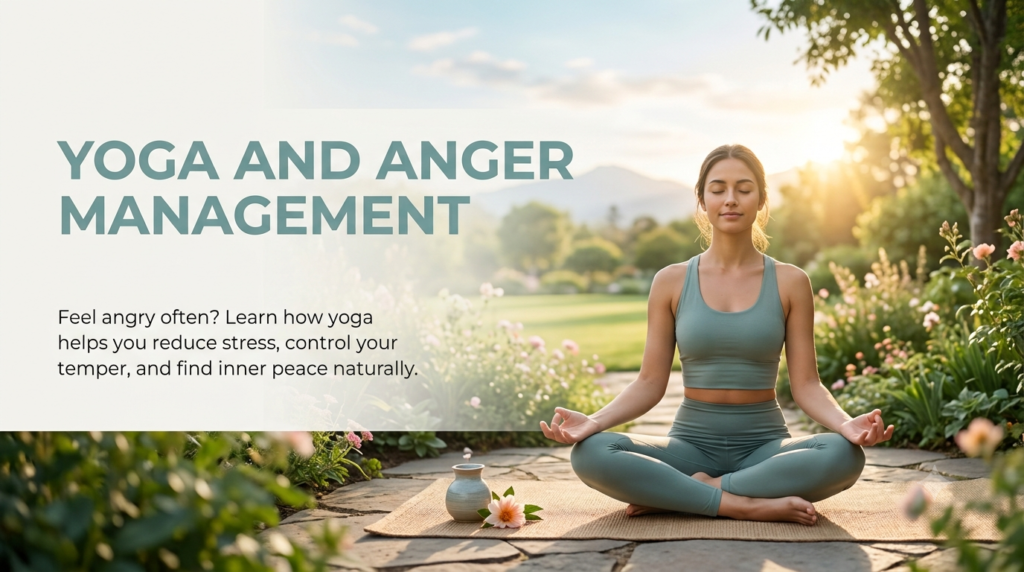
Anger is a common human emotion. Everyone experiences anger at times. It’s not wrong to feel angry. But when anger starts to control you, instead of controlling it, problems begin. It can harm your relationships, your health, your work, and your peace of mind. This is where yoga and anger management come together as a simple, natural, and effective solution.In today’s busy world, stress, work pressure, traffic, financial problems, and family issues make people irritable. Many people look for quick fixes like medication, or they simply try to suppress their anger. But suppressing anger doesn’t solve the problem. It only builds up pressure inside, like a soda bottle that’s repeatedly shaken. One day, it explodes.
That’s why more and more people are returning to one of our oldest and simplest practices: yoga. In this detailed blog, we’ll explain in very simple English how yoga and anger management work together, how yoga helps calm anger, and what you can do step-by-step starting today.
What exactly is anger?
Before we talk about yoga and anger control, let’s first understand anger in simple terms. Anger is your body’s way of reacting to a threat, disappointment, insult, or something that feels wrong. When you get angry, your brain sends a signal to your body that says danger or problem. This is called the fight-or-flight response. Your body then prepares to fight back or flee. When you get angry, here’s what happens inside your body:
- Your heart starts beating faster.
- Your muscles become tight and tense.
- Your breathing becomes short and rapid.
- Your face may become hot or red.
- Your mind becomes foggy, and it becomes difficult to think clearly.
- Stress hormones like adrenaline and cortisol are released into your bloodstream.
This reaction was very useful for early humans, who had to fight or flee wild animals. But in today’s world, this same reaction is triggered by small things a nasty comment, heavy traffic, a difficult boss, or a fight with a loved one. Because we can’t fight or run away from these modern problems, the energy of anger remains trapped within the body. Over time, this leads to stress, tension, and health problems.
The Real Problem: Uncontrollable Anger
Anger itself is not the enemy. The real problem is uncontrollable anger—anger that occurs too often, too intensely, or lasts too long. When this happens repeatedly, it can lead to:
- Broken relationships with family, friends, or coworkers
- High blood pressure and heart problems
- Headaches and body aches
- Bad decisions made during fluctuating mood swings
- Anxiety, depression, and low self-confidence
- Difficulty sleeping at night
- Lack of focus and poor performance at work or studies
This is why many people are learning yoga and anger management techniques, rather than simply trying to suppress their emotions or react without thinking.
Why yoga works so well for anger
Yoga is more than just stretching or difficult poses. It’s a complete system that brings together the body, breath, and mind. This is why yoga and anger management fit so well together yoga doesn’t just calm you down for a few minutes; it gradually retrains your entire nervous system to be calm.
Let’s look at how yoga works on anger, step by step, in simple terms.
1. Yoga calms your nervous system.
Your body has two main modes. One is called the sympathetic nervous system, or fight-or-flight mode. This is the mode your body is in when you’re angry, scared, or stressed. The other is called the parasympathetic nervous system, or rest-and-relax mode. This is the mode your body is in when you feel calm, safe, and relaxed.
Yoga, through slow movements and deep breathing, gradually shifts your body from fight-or-flight mode to rest-and-relax mode. This is a real, physical change within your body, not just a feeling. That’s why, even after 10-15 minutes of yoga, you often feel calm, light, and clear in your mind.
2. Yoga Increases Self-Awareness
One of the biggest reasons people get angry is that they don’t notice it until it becomes overwhelming. Regular yoga practice trains your mind to become more aware of your body, your breath, and your thoughts.
With this awareness, you start to notice the small warning signs of anger early a tight jaw, a rapid heartbeat, a feeling of heat in your chest. Once you notice these signs early, you have the opportunity to pause before reacting. This pausing is the real secret to good anger management.
3. Yoga Reduces Stored Tension in the Body
Have you ever noticed that when you’re angry or stressed, your shoulders become stiff, your neck stiff, or your jaw clenched? This is because anger and stress don’t just reside in your mind they’re stored as tension in your muscles.
Yoga postures gently stretch and loosen these tight areas. As physical tension is reduced, your mind also feels lighter. This is why people often feel emotionally better after a yoga class, even if they haven’t discussed their problems at all.
4. Yoga Balances Your Hormones
When you practise yoga regularly, it helps reduce cortisol, your body’s main stress hormone. Additionally, yoga helps increase serotonin and other feel-good chemicals in your brain. Over weeks and months, this hormonal balance plays a major role in reducing how quickly and intensely you get angry.
5. Yoga Improves Your Sleep
Poor sleep can make anyone more irritable and short-tempered. Yoga, especially light practice in the evening, helps calm the nervous system before bed, leading to deeper and more restful sleep. Better sleep means better control over your emotions the next day.
The Connection Between the Five Elements and Anger
According to ancient Indian belief, our body and mind are composed of five basic elements, collectively called the ‘five elements’ earth, water, fire, air, and space. When these five elements are in balance within us, we feel calm, stable, and content. But when there is an imbalance, especially when the fire element is too high, it often manifests as anger, impatience, and irritability.
Yoga directly works to bring these five elements back into balance. Slow, grounding poses connect you to the earth element and make you feel stable. Deep breathing exercises balance the air element and clear your mind. Cooling breathing techniques calm the excess fire element that causes heat and anger. This is one of the profound reasons why yoga and anger management are so closely connected in the Indian tradition yoga doesn’t just calm your mind for a moment; it works to restore balance within you at a much deeper, elemental level.
Best Yoga Poses for Anger Management (with Easy Steps)
If you’re new to yoga and anger management, here are simple, beginner-friendly poses you can try at home. You don’t need any expensive equipment just a mat, comfortable clothes, and a few quiet minutes.
1. Balasana (Child’s Pose)
How to do it: Sit on your heels, bend your body forward, and gently rest your forehead on the ground. Stretch your arms out in front of you, or keep them close to your body. Why it helps: This is a relaxing pose. It calms the mind, relieves fatigue, and gently releases tension from the back and shoulders. Stay here for 1-2 minutes and breathe slowly.
2. Setu Bandhasana (Bridge Pose)
How to do it: Lie on your back, bend your knees, and keep your feet flat on the floor. Slowly lift your hips towards the ceiling. Why it helps: This pose opens the chest, improves blood flow to the brain, and helps release accumulated frustration. It also improves your mood.
3. Adho Mukha Svanasana (Downward Dog)
How to do it: Start on your hands and knees, then lift your hips up and back, forming an inverted “V” shape with your body. Why it helps: This pose relieves stress and mild anxiety. It gently energises the body and calms a troubled mind, making it perfect for managing anger.
4. Marjariasana-Bitilasana (Cat-Cow Pose)
How to do it: Come on your hands and knees. Inhale and arch your back and look up (Cow Pose). Exhale and round your back and look down (Cat Pose). Repeat slowly.
Why it helps: This gentle back-and-forth movement releases tension from the spine and helps calm racing, angry thoughts.
5. Shavasana (Corpse Pose)
How to do it: Lie flat on your back, with your arms and legs relaxed and slightly apart. Close your eyes and breathe naturally. Why it helps: This often-overlooked, simple pose completely relaxes the body and mind at the end of a yoga session. It’s one of the best poses for restoring emotional balance.
6. Vajrasana (Thunderbolt Pose)
How to do it: Sit on your heels with your knees together and your back straight. This can also be done right after a meal. Why it helps: This grounding pose is calming and helps quiet a restless mind, making it easy to do anywhere, even at your office desk.
Breathing Techniques (Pranayama) to Reduce Anger Instantly
Breathing is the quickest way to control anger in the moment it arises. These simple pranayama techniques are an integral part of any yoga and anger management practice, and most can be done in just a few minutes.
1. Anulom Vilom (Alternate Nostril Breathing)
Close your right nostril with your thumb and slowly inhale through your left nostril. Then, close your left nostril with your finger, release your thumb, and exhale through your right nostril. Continue this alternating pattern. This balances both parts of the brain and calms an overactive mind. Practice for 5-10 minutes daily for best results.
2. Sheetali Pranayama (Cooling Breath)
Roll your tongue into a tube shape and slowly inhale through your mouth, then close your mouth and exhale through your nose. As the name suggests, this technique cools the body and mind perfect for when anger feels like heat inside your chest.
3. Bhramari Pranayama (Bee Breath)
Gently close your ears with your fingers, take a deep breath, and as you exhale, make a gentle humming sound like a bee. This creates a calming vibration that instantly relaxes the nervous system. It works great for sudden anger or irritation.
4. Deep Belly Breathing
Simply place one hand on your stomach and breathe slowly and deeply so that your belly moves up and down, rather than rapidly from your chest. This activates your body’s relaxation response in just a few seconds, and you can do it anywhere at your desk, in your car, or during an argument.
Meditation: The Secret Weapon of Anger Management
While yoga poses primarily work on the body, meditation works directly on the mind. Just 10-15 minutes of daily meditation practice can make a big difference in reducing anger triggers over time.
Here’s a very simple meditation technique for anger management that anyone can try, even complete beginners:
- Sit comfortably in a quiet place, either in a chair or on the floor.
- Close your eyes and take a few slow, deep breaths.
- Focus your full attention on your breath, flowing in and out of your body.
When thoughts of anger or frustration arise, don’t fight them or push them away. Simply notice them, and gently let them pass, like clouds moving through the sky. Repeatedly bring your attention back to your breath for 10-15 minutes.
Over time, this simple daily practice builds real emotional strength, so you’re less likely to react quickly in anger and more likely to pause and respond calmly and wisely.
A Simple Daily Yoga Routine for Anger Management
Here is an easy 20-30 minute daily routine that brings together everything explained above. You can practice this in the morning to start your day calmly, or in the evening to release the stress of the day.
| Time | Practice |
| 5 minutes | Deep belly breathing to settle the body |
| 10 minutes | Yoga poses: Cat-Cow, Downward Dog, Bridge Pose, Child’s Pose |
| 5 minutes | Pranayama: Anulom Vilom or Bhramari |
| 5-10 minutes | Simple sitting meditation |
| 2 minutes | Shavasana for final relaxation |
Practicing this simple routine every day, even for just a few weeks, can make a real and noticeable difference in how you handle anger and stress in your daily life.
Real-Life Situations Where Yoga Helps With Anger
To make this even more practical, here are common everyday situations where yoga and anger management skills can help you directly:
- Stuck in heavy traffic: Instead of honking and getting frustrated, try deep belly breathing while sitting in your car.
- An argument with a family member: Excuse yourself for two minutes and practice Bhramari (bee breath) before continuing the conversation.
- Feeling overwhelmed at work: Take a short break and do a few rounds of Anulom Vilom at your desk to calm your mind before responding to a stressful email.
- Feeling short-tempered with your children: A daily morning yoga practice, even just 15 minutes, can make you naturally calmer and more patient throughout the day.
- Trouble sleeping because of racing, angry thoughts: A short Shavasana or belly-breathing session before bed can help release the day’s tension.
Other Simple Tips to Support Yoga and Anger Management
Along with your yoga practice, these small lifestyle changes can boost your results even further:
- Get enough sleep – Tiredness makes anyone more irritable and quick to anger.
- Reduce caffeine – Too much tea, coffee, or energy drinks can increase anxiety and short temper.
- Eat a balanced diet – Try to avoid too much spicy and oily food, which, according to old wisdom, can increase the “fire” element in the body.
- Practice gratitude – Writing down three things you are thankful for each day helps shift your mind away from frustration.
- Take a pause – Before reacting in anger, try taking three slow, deep breaths and counting to ten in your head.
- Stay active – Regular movement, even a short walk, helps release built-up stress energy from the body.
- Limit screen time before bed – Too much phone or screen use late at night can disturb sleep and increase next-day irritability.
1. Can yoga really help control anger?
Yes, it can. Yoga and anger management are closely connected because yoga calms the nervous system, lowers stress hormones, and builds self-awareness. With regular practice, most people notice a real and lasting reduction in anger and irritability over time.
2. How long does it take for yoga to help with anger issues?
Some simple breathing techniques, like deep belly breathing or Bhramari, can calm sudden anger within just a few minutes. However, for real, long-term anger management, practicing yoga daily for at least 4-6 weeks usually shows clear and lasting improvement.
3. Which is the best yoga pose for sudden anger?
Child’s Pose (Balasana) and simple deep belly breathing work very well for sudden anger. They can be done almost anywhere, calm the body quickly, and only take a few minutes to feel the effect.
4. Is meditation necessary along with yoga for anger management?
While yoga poses help release physical tension stored in the body, meditation trains the mind itself to stay calm and aware. Combining both yoga poses and meditation together gives the best and most complete results for long-term anger management.
Final Thoughts
Anger is a natural, normal human emotion, but it does not have to control your life or your relationships. By practicing yoga and anger management techniques regularly including simple yoga poses, breathing exercises, and meditation you can slowly restore balance to both your body and your mind.
Remember, true calmness comes from balancing your inner energy, or panchtatva, and yoga remains one of the most natural, simple, and effective ways to achieve that balance, without any side effects.
Start small. Even 15-20 minutes of yoga each day can slowly transform how you handle stress and anger in your daily life. Be patient and kind with yourself, stay consistent with your practice, and over time, you will notice a calmer, happier, and more balanced version of yourself.