
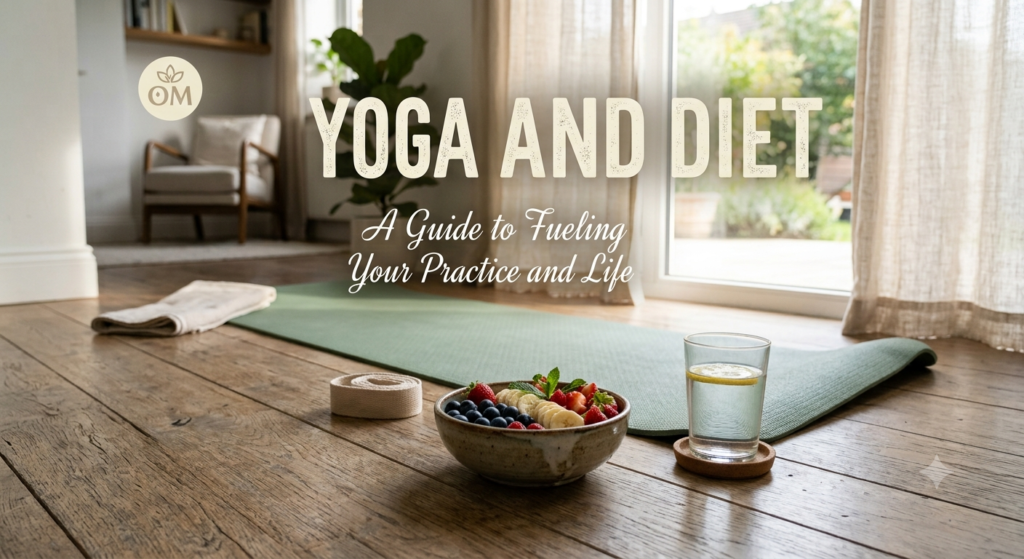
Have you ever finished a yoga session feeling light and energized one day, but sluggish and heavy the next? The difference may not be your poses it could be what you ate. Yoga and diet work together, and choosing the right foods before and after practice can improve your energy, focus, digestion, and recovery.
In this guide, we will answer all the common questions people ask about yoga and diet. You will learn what to eat before yoga, what to eat after, which foods to avoid, how ancient yogic wisdom looks at food, and what modern research says too. Everything here is explained in simple words so you can start applying it today.
Why Diet Matters in Yoga
Yoga is not just about doing asanas (poses) on a mat. It is a complete lifestyle that includes breathing, meditation, and mindful eating. The food you eat becomes the fuel for your body and mind. A heavy, oily meal before practice may make you feel sluggish. A light, balanced meal, on the other hand, may help you feel more focused and energetic during your session.
Many yoga teachers believe that the quality of food you eat can also affect your mood and mental clarity. This idea is not new it comes from ancient Indian texts that connect food, body, and mind as one system.
This connection isn’t only philosophical. Research published in the International Journal of Yoga suggests that regular yoga practice may support healthier eating habits and improve overall well-being when combined with a balanced diet. Health bodies like the WHO and Harvard T.H. Chan School of Public Health also point out that whole, minimally processed foods support steady energy and better long-term health which lines up closely with what yogic diet principles have taught for centuries.
If you’re new to yoga altogether, it may help to start with our guide on yoga for beginners before diving into diet changes.
The Yogic Concept of Diet: Sattvic Food
In traditional yoga philosophy, food is divided into three categories based on its effect on the mind and body:
- Sattvic food Fresh, natural, and pure foods like fruits, vegetables, whole grains, nuts, and milk. These are believed to promote calmness and clarity.
- Rajasic food Spicy, salty, or overly stimulating foods like strong spices, caffeine, and fried snacks. These may increase restlessness.
- Tamasic food Stale, processed, or heavy foods like leftovers, alcohol, and fast food. These are considered to make the body feel dull and heavy.
Yogis have traditionally preferred a sattvic diet because it is thought to keep the body light and the mind peaceful both important for a good yoga practice. This idea also connects to the concept of panchtatva, which refers to the five elements of nature (earth, water, fire, air, and space) that are believed to make up everything in the universe, including the food we eat and our own bodies.
It’s worth noting that sattvic diet principles come from traditional philosophy, not modern medical science. If you want to try this way of eating, it can be a good addition to a balanced lifestyle, but it should not replace medical advice for any health condition.
Common Myth About Sattvic Eating
Myth: You must be vegetarian to practice yoga.
Fact: Yoga philosophy often encourages a sattvic diet, but in reality, people practice yoga with many different eating patterns. Diet is a personal choice, and yoga welcomes practitioners regardless of what they eat.
What to Eat Before Yoga
One of the most common questions people ask is, What should I eat before doing yoga? Here are some simple guidelines:
- Keep the meal light—A heavy meal before yoga can make twisting and bending poses uncomfortable.
- Eat 1.5 to 2 hours before practice—this gives your body enough time to digest.
- Choose easy-to-digest foods—Fruits like bananas or apples, a small bowl of soaked nuts, or a light smoothie work well.
- Avoid oily or fried food—these can make you feel heavy and reduce your flexibility.
- Stay hydrated—Drink water, but avoid drinking too much right before you start.
If you practice yoga early in the morning on an empty stomach, that is completely fine too. Many yoga traditions including the practice of Namaskar actually recommend practicing before breakfast for better results.
Foods Before Morning Yoga vs. Evening Yoga
Your best pre-yoga snack can depend on the time of day you practice.
Morning Yoga
- Banana
- Apple
- A glass of warm water (with lemon, if you like)
Evening Yoga
- A small bowl of fruit
- A handful of soaked nuts
- A light smoothie
Meal Timing Chart
| Time Before Yoga | What to Eat or Drink |
|---|---|
| 2 Hours Before | Eat a light, balanced meal. |
| 1 Hour Before | Have a small snack like a banana, apple, or a handful of nuts. |
| 30 Minutes Before | Drink water only. Avoid eating food. |
What to Eat After Yoga
After a yoga session, your body needs proper nutrition to recover and refuel. Here’s what may help:
- Protein-rich foods—Lentils, paneer, yogurt, or eggs can support muscle recovery.
- Fresh fruits – They may help restore energy and hydration.
- Warm herbal tea—Ginger or tulsi tea can be soothing after practice.
- Whole grains—Foods like brown rice or whole wheat roti can help sustain energy levels.
Try to avoid heavy, spicy meals right after yoga, as your digestive system may still be settling down, especially after breathing exercises like pranayama.
Best Foods by Goal
| Goal | Recommended Food |
|---|---|
| Energy | 🍌 Banana for quick energy |
| Protein | 🥣 Greek yogurt for muscle support |
| Hydration | 🥥 Coconut water for natural electrolytes |
| Recovery | 🌱 Lentils for protein and fiber |
| Light Breakfast | 🌾 Oats for steady energy |
Foods to Avoid for a Better Yoga Practice
If you want to get the most out of your yoga sessions, it may help to reduce or avoid the following:
- Deep-fried and processed foods
- Excess sugar and refined carbs
- Too much caffeine
- Carbonated and sugary drinks
- Heavy non-vegetarian meals right before practice
This does not mean you can never enjoy these foods. Moderation is key, and yoga philosophy encourages balance rather than strict restriction.
Yoga and Diet for Weight Management
Many people start yoga with the goal of managing their weight. While yoga alone may support this goal, combining it with a balanced diet can make a bigger difference. Poses like Surya Namaskar (Sun Salutation), along with a diet rich in fiber, vegetables, and lean protein, may help support a healthy metabolism over time. However, yoga should be seen as one part of an overall healthy lifestyle rather than a quick fix for weight loss. For a deeper dive, check out our full guide on yoga for weight loss.
Yoga and Diet for Digestion
Certain yoga poses are traditionally believed to support healthy digestion, including:
- Pawanmuktasana (Wind-Relieving Pose)
- Vajrasana (Thunderbolt Pose)—often practiced after meals
- Ardha Matsyendrasana (Half Spinal Twist)
Along with these poses, eating fiber-rich foods, drinking enough water, and eating at regular times can support digestive health. Advanced practitioners sometimes also explore techniques like Nauli Kriya, which is traditionally linked to digestive and abdominal health. If you have ongoing digestive issues, it’s best to consult a doctor rather than relying only on yoga and diet changes.
Simple Diet Tips for Yoga Practitioners
Here are some easy-to-follow tips that many yoga practitioners find helpful:
- Eat fresh, seasonal fruits and vegetables whenever possible.
- Reduce processed and packaged food.
- Drink plenty of water throughout the day.
- Practice mindful eating eat slowly and without distractions like phones or TV.
- Try to maintain regular meal timings.
- Include a variety of whole grains, legumes, and nuts in your diet.
- Limit late-night heavy meals, especially if you plan to do morning yoga.
A Sample Sattvic Meal Plan
If you’re curious about how a sattvic diet might look in daily life, here is a simple example:
| Meal | Food Suggestions |
|---|---|
| Morning | Warm water with lemon and soaked almonds |
| Breakfast | Fresh fruit bowl or vegetable poha |
| Lunch | Dal, brown rice, steamed vegetables, and curd |
| Evening | Herbal tea with a handful of nuts |
| Dinner | Light khichdi or vegetable soup |
This is just a sample, and you can adjust it based on your personal preferences, body type, and any health conditions you may have.
Common Mistakes People Make with Yoga and Diet
- Practicing yoga right after a heavy meal—this can cause discomfort and reduce flexibility.
- Skipping meals completely before yoga—This may leave you feeling low on energy.
- Following a diet plan that isn’t suited to their body—Not every diet works the same for everyone.
- Ignoring hydration—especially important during hot yoga or intense sessions.
- Expecting instant results—Diet and yoga both work gradually over time.
A Closer Look: What’s in These Foods
Understanding why certain foods are recommended can make it easier to stick with them. Here’s a quick breakdown of a few staples:
- Banana – Rich in potassium and quick-digesting carbohydrates, making it a handy pre-yoga snack for fast energy.
- Oats – High in fiber, which supports sustained energy rather than a quick spike and crash.
- Lentils – A good source of plant-based protein and iron, useful for post-practice recovery.
- Coconut water naturally rich in electrolytes, helpful for rehydrating after a sweaty session like hot yoga.
- Greek yogurt – Combines protein with probiotics, which may also support gut health.
[Image suggestion: Close-up shots of banana, oats, lentils, and coconut water arranged as a grid]
Who Should Follow This Diet?
Yoga and diet guidance isn’t one-size-fits-all. Here’s how it can apply to different groups:
- Beginners – Start simple. Focus on light, whole foods, and don’t worry about following a strict sattvic diet right away.
- Office workers – Prioritize hydration and light snacks, since long sitting hours combined with heavy meals can make evening practice harder.
- Seniors – Easily digestible foods and smaller, more frequent meals may work better alongside gentle yoga.
- People focused on weight management pairing yoga with a fiber-rich, portion-controlled diet tends to work better than either alone.
- Athletes May need slightly more protein and carbohydrates to support recovery from both yoga and other training.
- Pregnant women – Diet and yoga practice should always be guided by a healthcare professional during pregnancy.
Final Thoughts
The connection between yoga and diet is simple: what you eat can support what you practice. A light, balanced, and mostly natural diet may help you feel more energetic, focused, and comfortable during your yoga sessions. At the same time, remember that everyone’s body is different, so it’s a good idea to listen to your own body and consult a nutritionist or doctor for personalized advice, especially if you have any existing health conditions.
Yoga is a journey, and so is finding the right diet for your body. Start small, stay consistent, and enjoy the process.
1. What should I eat before doing yoga?
It’s best to eat a light meal, like fruit or a small snack, about 1.5 to 2 hours before practice. Avoid heavy or oily food right before yoga.
2. Is it okay to do yoga on an empty stomach?
Yes, many people practice yoga first thing in the morning on an empty stomach. This is a common and traditional approach.
3. What is a sattvic diet in yoga?
A sattvic diet includes fresh, natural, and simple foods like fruits, vegetables, and whole grains. It is traditionally believed to support a calm and clear mind, though this is based on yogic philosophy rather than scientific evidence.
4. Can yoga and diet help with weight loss?
Yoga combined with a balanced diet may support weight management as part of a healthy lifestyle, but it works best alongside consistent effort and is not a guaranteed quick solution.
5. What foods should I avoid before yoga practice?
It’s generally better to avoid fried, spicy, or heavy foods before yoga, as they may make certain poses uncomfortable.
6. How does diet affect yoga practice?
The food you eat can affect your energy levels, digestion, and comfort during practice. A light, balanced diet may help you feel more focused and flexible.