
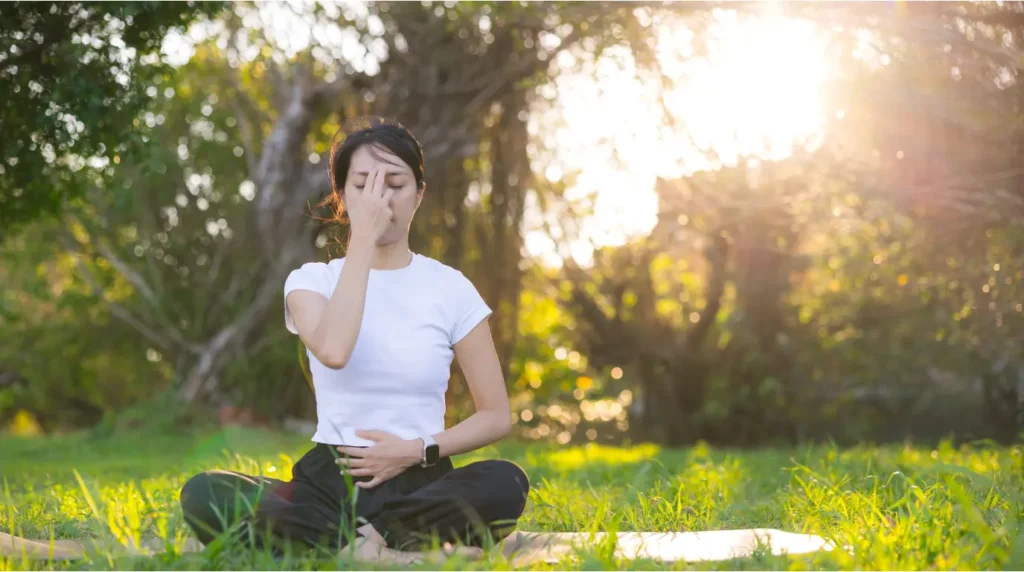
Have you ever felt sluggish in the morning, unable to shake off that heavy, low-energy feeling no matter how much coffee you drank? If so, your breath may hold the answer. Surya Bhedan Pranayama, an ancient yogic breathing technique, is designed to do exactly this awaken your body’s inner fire and create a feeling of alertness and warmth from within.
What is Surya Bhedan Pranayama?
The word “Surya” means sun, and “bhedan” means to pierce or pass through. So, Surya Bhedan Pranayama simply means sun-piercing breath. In this technique, you inhale through only the right nostril and exhale through only the left.
According to traditional yogic philosophy, the right nostril is connected to the Pingala Nadi, which is associated with solar, active, and heating energy. By consciously breathing through this nostril, practitioners believe you activate this solar energy channel, which can help create inner warmth, alertness, and vitality. It’s important to note that this belief stems from traditional yogic philosophy and is not supported by modern scientific evidence. Some small studies suggest that right nostril breathing may be associated with increased activity of the sympathetic nervous system, which could explain the warming and energising sensations reported by many practitioners. However, more research is needed to definitively confirm these effects.
History of Surya Bhedan Pranayama
Surya Bhedan is mentioned in classical Hatha Yoga texts, where it is described as a heating breathing practice associated with activating the body’s solar energy. Different traditions and gurus may offer slightly different versions of this technique, especially regarding breath retention, but the basic pattern of breathing through the right nostril remains the same in most books.
Why practise Surya Bhedan Pranayama?
In our fast-paced lives, many of us struggle with low energy, poor focus, or a persistent feeling of coldness in the body, especially during the winter months. Traditional practices often recommend Surya Bhedan Pranayama as a way to naturally address these issues without relying on external stimulants like caffeine.
This pranayama is also often performed before a meditation session, as the alertness it induces can help reduce mental lethargy and improve concentration.
Step-by-Step Guide: How to Do Surya Bhedan Pranayama
Practising Surya Bhedan Pranayama correctly is essential to safely experience its full benefits. Here’s a simple step-by-step guide for beginners.
Step 1: Choose a comfortable sitting position
Sit in a comfortable cross-legged position, such as Sukhasana, Padmasana, or Vajrasana. Keep your spine straight and shoulders relaxed, and gently close your eyes. If sitting on the floor isn’t comfortable, you can sit on a chair with your feet flat on the floor.
Step 2: Set your hand position (mudra)
Create Nasagra Mudra with your right hand. This means folding your index and middle fingers towards your palm, keeping your thumb, ring finger, and little finger extended. You will use your thumb to close your right nostril and your ring finger to close your left nostril.
Step 3: Close your left nostril and inhale.
Using your ring finger, gently close your left nostril. Inhale slowly and deeply through your right nostril, filling your lungs completely. Try to keep your inhalation slow, steady, and controlled, rather than rapid or forceful.
Step 4: Close and hold both nostrils (optional for beginners).
If you’re comfortable, you can use Kumbhaka to hold your breath for a moment after inhaling, holding both nostrils closed with your thumb and ring finger. Beginners can skip this step initially and simply focus on the inhalation and exhalation pattern.
Step 5: Close the Right Nostril and Exhale Through the Left
Release your ring finger from the left nostril and close the right nostril with your thumb. Exhale slowly and completely through the left nostril. The exhalation should be slower than the inhalation, if possible.
Step 6: Repeat the Cycle
This completes one round. Continue this pattern of inhaling through the right nostril and exhaling through the left nostril for 5 to 10 rounds if you are a beginner. Practitioners with more experience may gradually increase the duration under proper guidance.
Recommended Breathing Ratio
Following a breathing ratio can help you practise with more control and awareness.
Beginner
- Inhale: 4 counts
- Exhale: 6 counts
Intermediate
- Inhale: 4 counts
- Hold: 4 counts
- Exhale: 8 counts
Breath retention (Kumbhaka) should only be practised under the guidance of an experienced teacher, as holding the breath incorrectly can cause strain.
Common Mistakes to Avoid
Many beginners unknowingly make small errors that reduce the effectiveness of this practice or cause discomfort. Watch out for:
- Breathing too fast instead of slowly and steadily
- Forcing the breath instead of letting it flow naturally
- Practising on a full stomach after a heavy meal
- Holding the breath for too long, especially as a beginner
- Lifting the shoulders while inhaling instead of keeping them relaxed
- Practising in a very hot or stuffy environment
Avoiding these mistakes can make your practice smoother, safer, and more effective.
Signs You’re Doing It Correctly
Since this is a subtle practice, it helps to know what correct practice feels like. You may notice:
- Smooth, steady breathing without strain
- A gentle warmth spreading through the body
- Improved focus and mental clarity
- A calm yet alert state of mind
- No dizziness or discomfort during or after the practice
If you feel breathless, overheated, or dizzy at any point, stop the practice and rest in a comfortable seated or lying position.
Potential Benefits of Surya Bhedana Pranayama
While traditional texts describe many benefits of this pranayama, it’s important to understand these as traditional claims that may need more scientific validation. Here are some of the benefits commonly associated with regular practice:
1. May Help Increase Energy and Alertness
Since this technique is associated with activating Pingala Nadi, regular practitioners often report feeling more awake, energised, and mentally alert after a session, which is especially useful for sluggish mornings.
2. May Support Body Warmth
Traditional yogic philosophy suggests that Surya Bhedana Pranayama generates internal heat in the body. This is why it is often recommended for people who tend to feel cold easily or during colder seasons.
3. May Help Improve Focus and Concentration
By calming mental fluctuations and increasing alertness, this pranayama may help create a more focused state of mind, making it a useful practice before study sessions or meditation.
4. May Support Healthy Digestion
Some traditional practitioners believe that the internal heat generated through this breathing technique may help stimulate digestive fire, or “agni”, potentially supporting better digestion over time.
5. May Help Balance Low Blood Pressure
Traditional yoga texts associate Surya Bhedana Pranayama with a mild stimulating effect on blood circulation, which is why it is sometimes suggested for individuals dealing with low blood pressure. However, this should only be practised under professional supervision and never as a replacement for medical treatment.
6. May Help Reduce Lethargy and Depression-Like Symptoms
Traditional texts suggest this pranayama may help uplift mood and reduce feelings of heaviness or lethargy, though anyone dealing with persistent low mood should consult a qualified healthcare professional rather than relying solely on breathing exercises.
The Science Behind Right-Nostril Breathing
Modern research on nostril-specific breathing, sometimes called forced unilateral nostril breathing in scientific literature, has found some interesting patterns. A few small-scale studies suggest that right-nostril breathing may be linked with increased sympathetic nervous system activity, which is the part of your nervous system responsible for alertness and the “fight or flight” response.
This could explain the warming and energising sensation many people feel after practising Surya Bhedana Pranayama. However, it’s important to be clear that this research is still limited, sample sizes are often small, and more rigors studies are needed before drawing firm conclusions. Traditional yogic philosophy and modern science offer two different lenses for understanding this practice, and both are worth respecting on their own terms.
Possible Side Effects
If practised incorrectly or excessively, Surya Bhedana Pranayama may lead to the following:
- Dizziness
- Feeling overheated
- Dry mouth
- Headache
- Increased restlessness
If any of these symptoms occur, stop the practice immediately and rest. Seek guidance from a certified yoga teacher or healthcare professional if symptoms continue or worsen.
Who Should Avoid Surya Bhedana Pranayama?
While this pranayama may offer several benefits, it is not suitable for everyone. You should avoid or practise this technique only under expert guidance if you have the following:
- High blood pressure or hypertension
- Heart disease or any cardiac conditions
- Epilepsy or seizure disorders
- Anxiety disorders or a tendency to feel overheated easily
- A fever or any acute illness
- Are pregnant without consulting a doctor and a certified yoga instructor first.
Since this pranayama generates heat in the body, individuals who are already prone to excess heat, anger, or high Pitta dosha according to traditional wellness philosophy may also want to practise this with caution or avoid it during summer months.
Best Time and Timing to Practise
The best time to practise Surya Bhedan Pranayama is early in the morning, on an empty stomach, and preferably at sunrise. This is in keeping with traditional beliefs about syncing your practice with the sun’s energy. If morning isn’t possible, you can do it in the afternoon, but avoid practising right before bedtime, as it can increase alertness and make it difficult to fall asleep.
For beginners, 5 to 10 rounds are sufficient. As you improve your relaxation and lung capacity, you can gradually increase the time, preferably under the supervision of a certified yoga teacher who can guide you through breath-holding and advanced variations.
Can you do Surya Bhedan every day?
Yes, healthy adults can do it in small amounts daily if they are comfortable with the technique and do not have any medical conditions that preclude it. Beginners should start slowly, paying attention to how their body responds, and seek guidance from a qualified yoga teacher before increasing the frequency or duration.
Should you do it before or after yoga?
Many yoga teachers recommend doing Surya Bhedan Pranayama after light asanas and before meditation, when the body is already relaxed and the mind is more ready to focus. This sequence allows the energising effects of the breath to easily integrate into your meditation practice.
Tips for Beginners
- Always practise on an empty stomach, preferably in the morning.
- Keep your breathing slow, smooth, and controlled never forceful.
- If you feel dizzy, uncomfortable, or overheated, stop immediately.
- Practice in a quiet, well-ventilated area free from distractions.
- For a balanced routine, combine this practice with other calming pranayamas, such as Chandra Bhedan or Nadi Shodhana.
- If you are new to pranayama practice, consult a certified yoga instructor.
A Note on the Five Elements
In traditional yogic thought, this practice is often associated with the element of fire, one of the five elements believed to compose all things earth, water, fire, air, and space. Surya Bhedan Pranayama is believed to stimulate the inner fire element, which traditional practitioners associate with energy, transformation, and digestion.
How Surya Bhedana Pranayama Differs From Other Pranayamas
It’s easy to confuse Surya Bhedana Pranayama with other nostril-based breathing techniques, so here’s a quick comparison to clear the confusion:
| Technique | Method | Traditional Effect |
|---|---|---|
| Surya Bhedana Pranayama | Inhale through the right nostril and exhale through the left nostril. | Traditionally associated with heating and energising effects. |
| Chandra Bhedana Pranayama | Inhale through the left nostril and exhale through the right nostril. | Traditionally associated with cooling and calming effects. |
| Nadi Shodhana (Alternate Nostril Breathing) | Alternately inhale and exhale through the left and right nostrils in a balanced pattern. | Traditionally practiced for balance, calmness, and mental clarity. |
Key Takeaways
- Inhale through the right nostril and exhale through the left.
- Traditionally believed to increase warmth and alertness.
- Best practised in the morning on an empty stomach.
- Avoid if you have certain medical conditions unless advised by a healthcare professional.
- Practise gently and consistently rather than forcefully.
Final Thoughts
Surya Bhedana Pranayama is a simple yet powerful breathing technique rooted in traditional yogic philosophy, believed to bring warmth, alertness, and energy to both body and mind. While traditional texts speak highly of its benefits, it’s always wise to approach it with awareness, practise it correctly, and consult a professional if you have any underlying health conditions.
As with most yogic practices, consistency matters more than intensity. Start slow, listen to your body, and let this ancient technique become a mindful part of your daily routine.
1. What does Surya Bhedana Pranayama mean?
Surya Bhedana Pranayama means “sun-piercing breath”. It involves inhaling through the right nostril and exhaling through the left nostril to activate the body’s solar, energising channel, according to traditional yogic philosophy.
2. Can beginners practise Surya Bhedana Pranayama?
Yes, beginners can practise this pranayama, but it’s best to start with 5 to 10 rounds and learn the correct technique from a certified yoga instructor before progressing further.
3. Is Surya Bhedana Pranayama good for high blood pressure?
No, this pranayama is generally not recommended for people with high blood pressure, as it may increase internal heat and stimulate the nervous system. Always consult a doctor before practising.
4. What is the best time to do Surya Bhedana Pranayama?
The best time is early morning on an empty stomach, ideally during sunrise, though it can also be practised in the late afternoon if mornings aren’t convenient.
5. How is Surya Bhedana different from Chandra Bhedana Pranayama?
Surya Bhedana involves inhaling through the right nostril and is considered heating, while Chandra Bhedana involves inhaling through the left nostril and is considered cooling.
6. Can Surya Bhedana Pranayama help with low energy?
Many traditional practitioners believe it may help increase alertness and reduce feelings of lethargy, though individual experiences can vary and it should not replace medical advice for chronic fatigue.
7. Why do I feel dizzy after practising Surya Bhedana Pranayama?
Dizziness usually happens when the breath is forced, held for too long, or practised too fast. If this happens, stop the practice, rest, and try again later with slower, gentler breathing. Consult a teacher if dizziness continues.
Sources and References
- Hatha Yoga Pradipika
- Gheranda Samhita
- Peer-reviewed research on unilateral nostril breathing and autonomic nervous system activity
- National Centre for Complementary and Integrative Health (NCCIH) resources on yoga and breathing practices
- World Health Organisation (WHO) general physical activity and wellness guidance