
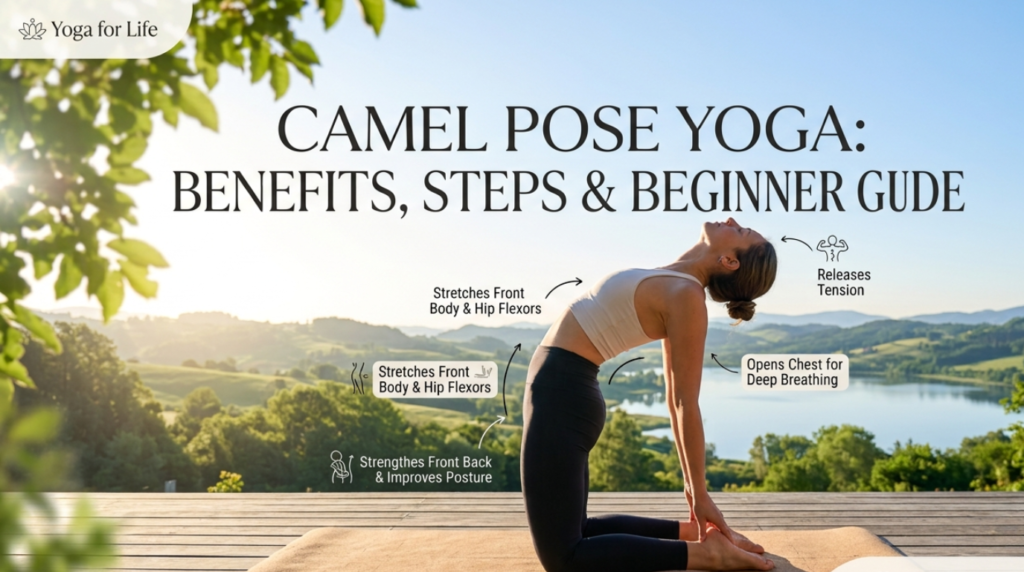
Camel Pose Yoga: Benefits, Steps & Beginner Guide
Have you ever felt stiff after sitting at a desk all day? Or perhaps your back feels tight and your chest feels constricted? If so, Camel Pose yoga might be right for you.
Camel Pose (Ustrasana) is a kneeling backbend in which you bend your spine and walk your hands toward your ankles. It opens the chest, stretches the front of the body, strengthens the back, and improves posture and breathing. Beginners should hold it for 15-20 seconds and always warm up first.
Camel Pose, also known as Ushtrasana in Sanskrit (Ushtra means camel), is one of the most effective backbends in yoga. It looks simple, but it works multiple parts of your body simultaneously the spine, chest, hips, and even your breath. In this guide, we’ll explain Camel Pose yoga in simple terms, based on the principles of true yoga teaching, so even a complete beginner can do it safely. I’ve practiced and taught backbends for years, and Camel Pose is one of the poses I ask about the most especially because it looks difficult but is actually quite easy to do once you understand the correct form. Let’s break it down.
Quick Facts About Camel Pose Yoga
| Detail | Information |
| Sanskrit name | Ustrasana |
| Pose type | Kneeling backbend |
| Difficulty level | Intermediate |
| Main body parts worked | Spine, chest, shoulders, hip flexors, thighs |
| Best time to practice | Mid or late in a yoga session, after warm-up |
| Average hold time | 15–30 seconds |
| Avoid if you have | Back injury, high/low blood pressure, migraine, neck pain |
What is Camel Pose Yoga?
Camel Pose is a kneeling backward-bending yoga pose in which you bend your spine backward and reach your hands toward your ankles. The shape of this pose resembles the hump of a camel, hence its name.
This pose opens your chest, stretches the front of your body, and strengthens your back muscles. It’s usually done in the middle or late part of a yoga class because the spine needs to be warmed up before attempting such a deep backbend.
Camel Pose isn’t just a physical stretch it also has an emotional aspect. Many yoga teachers say it helps release tension accumulated in the chest and shoulders. When you open your heart in this pose, you may feel a sudden emotional surge. This is a common and normal reaction; nothing to worry about.
The Meaning Behind Camel Pose
In yoga philosophy, the human body is considered a reflection of nature. This concept is called Panchtatva, which means the five elements earth, water, fire, air, and space. Camel Pose is closely connected to the element of space, as it opens the chest cavity and creates more space for breath and energy to move freely. This is why Camel Pose can feel so freeing once your body gets used to it.
Muscles that Camel Pose works
Understanding what happens inside your body during Camel Pose helps you practice it more safely and effectively.
Muscle Group
What Happens
- Rectus Abdominis (Front Abs)
- Stretches when the torso opens backward
- Erector Spinae (Lower Back)
- Contracts to support the backbend
Hip Flexors
- Lengthen when the hips extend forward
- Quadriceps (Front Thighs)
- Stretch from a kneeling backbend position
- Shoulder and Chest Muscles
- Open and stretch when the arms reach backward.
Neck Muscles
Gently lengthen if the head bends backward.
How to Do Camel Pose Step by Step
- It’s very important to do Camel Pose yoga correctly. Incorrect technique can strain your lower back or neck. Follow these simple steps:
- Start by kneeling. Keep your knees hip-width apart. Your shins and tops of your feet should touch the mat.
- Place your hands on your lower back. Fingers should be pointing down so that your hips are cushioned.
- Lift your chest. Press your hips slightly forward and lift your heart toward the ceiling before leaning back.
- Slowly bend back. When you feel stable, move one hand at a time toward your ankles. If you can’t reach your ankles, place your hands on a yoga block placed near your feet.
- Keep your neck relaxed. Don’t force your head back. Let it fall naturally, or if you feel any strain in your throat or neck, keep it neutral.
- Stay in this pose. Stay here for 15 to 30 seconds, breathing slowly and evenly.
- Slowly come back up. First, bring your hands back to your hips, then lift your chest up and return to a straight kneeling position. After this, relax into Child’s Pose.
- Take your time with each step. Camel yoga isn’t a race safely opening your body requires weeks of consistent practice, not days.
- Benefits of Camel Pose Yoga
Camel pose, a yoga pose, offers real, noticeable benefits for both body and mind. Here’s a closer look.
1. Opens the Chest and Lungs
This pose fully stretches your chest muscles, allowing you to breathe deeply. It’s especially beneficial for those who sit for long periods of time and have a hunched and closed posture.
2. Improves Spinal Flexibility
Regular practice of Camel Pose keeps the spine flexible. It reduces stiffness and supports the natural curve of the back over time.
3. Strengthens Back Muscles
This backbend actively works the lower back, shoulders, and glutes. With consistent practice, it builds strength that supports better posture throughout the day.
4. Stretches the Front Body
This pose stretches your abdominals, hip flexors, thighs, and neck making it helpful for those struggling with stiffness from sitting too much.
5. Boosts Confidence and Mood
Because Camel yoga opens the heart center, it is known to help reduce accumulated emotional tension. Many practitioners report feeling calmer and more confident after regular practice.
6. Aids Digestion
Gentle stretches in the abdominal area can help massage the internal organs, which may improve digestion over time.
7. Improves Posture
If you spend hours on your phone or laptop, your shoulders may tend to hunch forward. Camel Pose helps counteract this by actively opening the chest and shoulders in the opposite direction.
Who Shouldn’t Do Camel Pose?
Camel Pose is powerful, but it’s not right for everyone. Avoid or modify this pose if you have the following conditions:
- Recent back injury or chronic lower back pain
- High or low blood pressure
- Neck problems or frequent migraines
Insomnia
Pregnancy (practice only under the guidance of a trained instructor)
If you have any existing health problems, always consult a doctor or certified yoga teacher before attempting Camel Pose. Tips for Beginners
If you’re new to Camel Pose, these simple tips will make your practice easier and safer:
Use props. Yoga blocks near your ankles help you reach the pose without overexerting yourself.
Warm up first. Never attempt Camel yoga with a cold body. A few rounds of cat-cow stretch or sun salutations first make a big difference.
Engage your core. A strong, active core protects your lower back during backbends.
Breathe slowly. Deep, steady breathing relaxes your muscles and allows you to go deeper and deeper naturally, without straining anything.
Don’t force it. Flexibility develops over time. Never put your body through pain a gentle stretch is fine, but not intense pain.
Relax after the pose. Always perform Child’s Pose after Camel Pose to relax and unwind your spine.
Common Mistakes to Avoid
Small mistakes can negate the benefits of Camel yoga or cause discomfort. Keep these things in mind:
Bending the lower back: Instead of bending only from the lower back, lift the chest first and lengthen the entire spine.
Lowering the head too quickly: This can strain the neck. Lower your head back slowly, and only when comfortable.
Breathing: Breathing should be smooth and continuous throughout the pose, never held or rushed.
Coming into the full pose quickly: If you can’t reach your heels yet, it’s perfectly fine to place your hands on your hips this is still the full version of the pose.
How often should you do Camel Pose?
You can do Camel Pose two to three times a week as part of a regular yoga routine. If your body responds well, you can even do it daily with a proper warm-up. As always, listen to your body and rest when needed consistency matters more than speed.
Camel Pose Variations for All Levels
If the full pose feels difficult, these variations help you build up safely:
- Half Camel Pose: Keep one hand on your lower back and reach the other hand toward the same-side heel.
- Camel Pose with Blocks: Place blocks near your ankles and rest your hands on them instead of the floor.
- Supported Camel Pose: Practice near a wall behind you for extra support while learning the backbend.
These variations help build strength and confidence before attempting the full expression of the pose.
Poses to Pair With Camel Pose
For a well-rounded practice, combine camel pose with these related poses:
- Cat-Cow Stretch – to warm up the spine beforehand
- Bridge Pose – a gentler backbend that prepares the body for deeper backbends
- Child’s Pose – the ideal counter-pose to rest the spine afterward
- Cobra Pose – another chest-opening pose that builds backbend strength gradually
Final Thoughts
Camel pose yoga is more than just a backbend. It’s a pose that opens the body, releases stress, and improves posture and breathing all at once. Whether you’re a beginner or an experienced practitioner, this pose can bring genuine, lasting benefits to your daily life.
Start slow, listen to your body, and stay consistent. With regular practice, camel pose yoga can become one of the most rewarding parts of your yoga journey.
This article is for general wellness information only and is not a substitute for professional medical or fitness advice. Please consult a certified yoga instructor or doctor before starting any new yoga practice, especially if you have an existing health condition.
1. Is camel pose good for beginners?
Yes, beginners can practice camel pose, but they should start slowly with modifications like keeping hands on the hips or using yoga blocks near the ankles. It’s best to learn this pose under the guidance of a trained instructor at first.
2. What are the main benefits of camel pose yoga?
Camel pose yoga opens the chest, improves spine flexibility, strengthens the back, boosts posture, and helps release emotional tension. It also supports deeper breathing and better digestion.
3. Can camel pose help with back pain?
Camel pose can strengthen back muscles and improve flexibility, which may help with mild stiffness. However, people with existing back injuries or chronic pain should avoid this pose or practice it only under expert supervision.
4. How long should I hold camel pose?
Beginners should hold camel pose for about 15 to 20 seconds. As your body adapts to the stretch, you can gradually increase the hold to 30 seconds or more, always listening to your body’s comfort level.